

In eighth grade I was voted Most Likely to Become President, which you’d think would set me up for a life of campaigning, leading and putting myself out there. But like most eighth grade popularity contests, it didn’t accurately determine my future. And if I’m being completely transparent, I would have to say I am a self-proclaimed introvert. I live inside my mind and enjoy my own company. I have to formulate responses before I feel ready to share, I envy those that can spew off brilliant ideas at a moment’s notice. With this self-awareness I have always felt that leadership and managing a team was something I’d never feel ready for or necessarily want to take on, despite what my fellow eighth graders thought.
I chose to take a strategic approach to reflecting on my decision by performing an Assumption and Questions plotting exercise (based on IBM’s Enterprise Design Thinking activity) by myself to determine what I have answered and have yet to answer with my year of management experience.
Assumptions & Questions
These are the assumptions I had going into management.
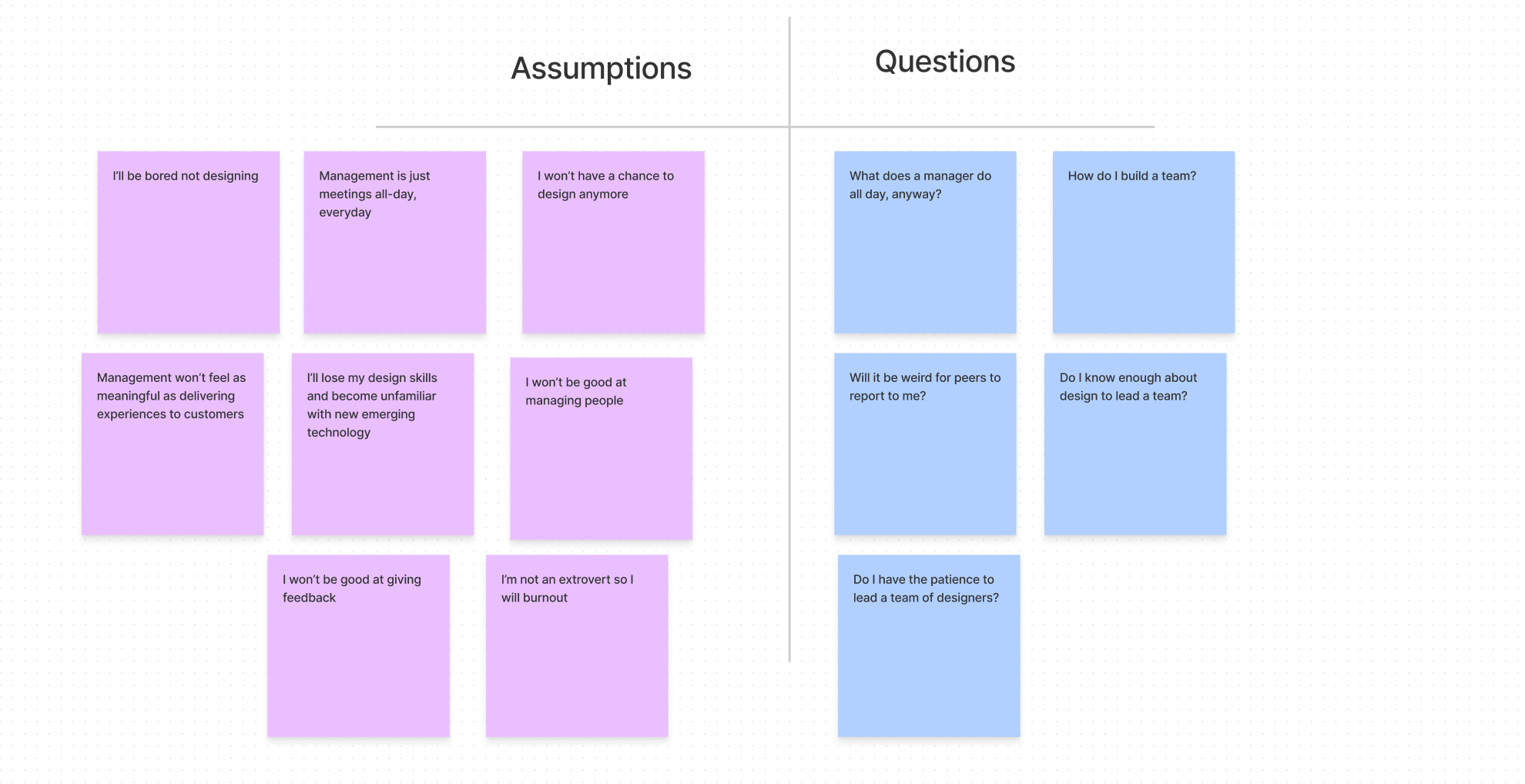
FigJam used for this exercise
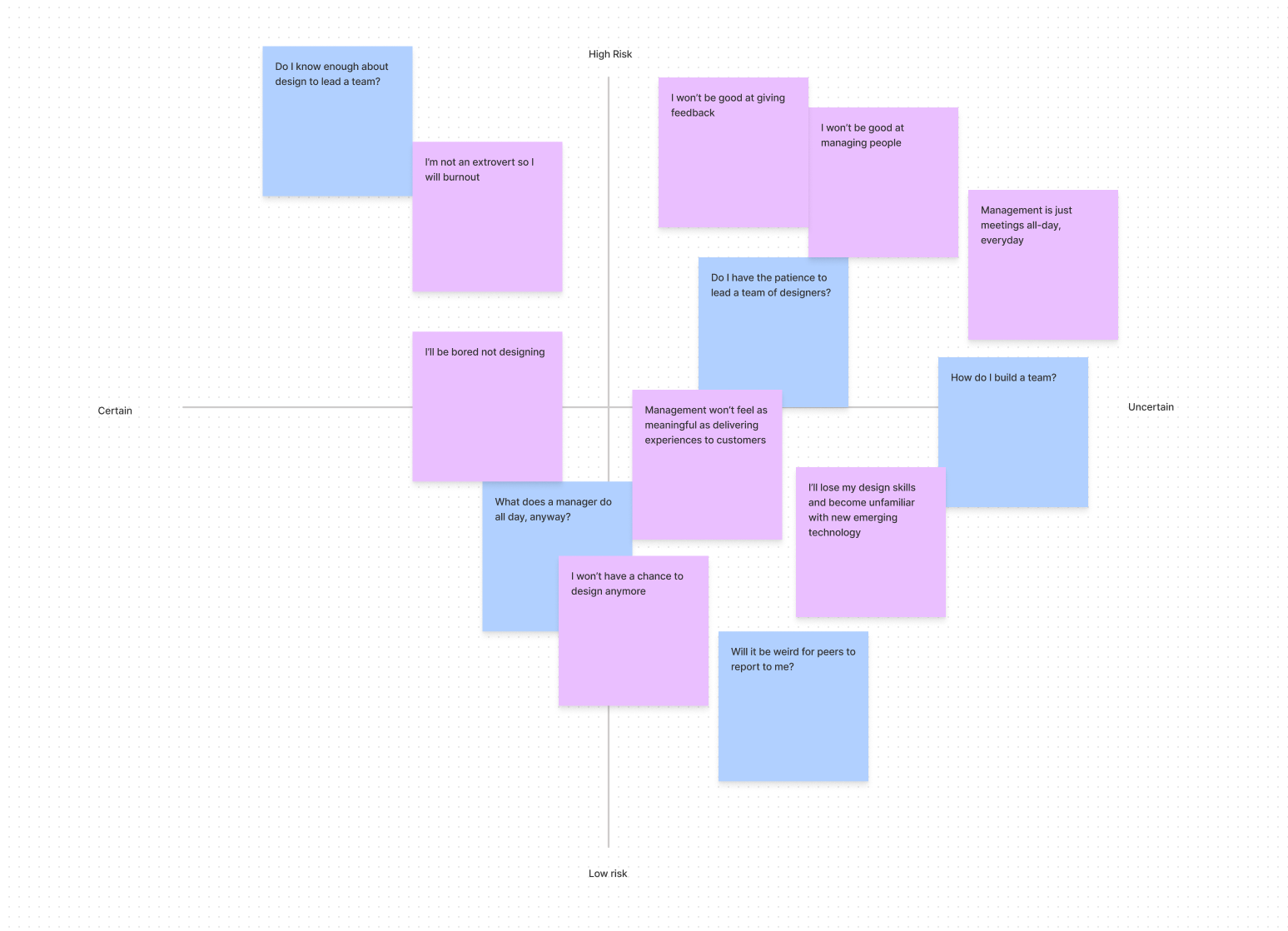
FigJam used for this exercise
Risk assessment
I plotted my questions and assumptions to get a rough idea of what would be the most uncertain/riskiest to answer.
Findings & Resolutions
Finally, I wrote out my findings/resolutions from my first year of managing a design team.
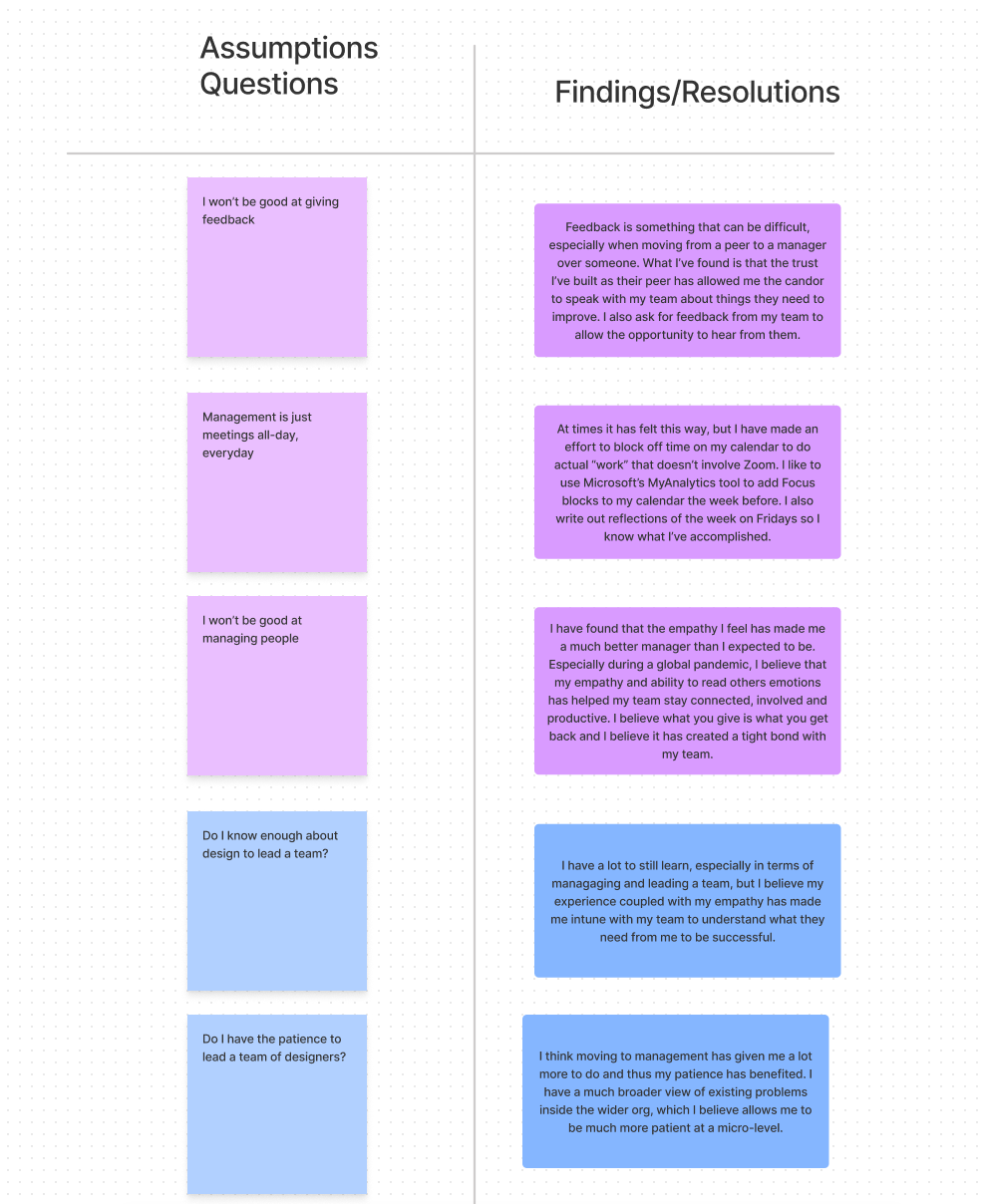
FigJam used for this exercise
why
Performing the above Assumptions activity has shown me how my preconceived notions of management have been answered over the course of the past year, but doesn’t necessarily reflect why I decided to take the chance with leadership, mostly just what I felt about management beforehand.
The ‘Why’ behind my decision was two-fold at the time.
My first ‘Why’ was a new challenge. I have been designing experiences for a little over a decade now and it can become predictable. I had just spent two years helping build a Design System for Workfront, which I still see as one of my favorite projects, and I had also helped reshape Workfront. They were time-intensive projects with a lot of politics and hurdles to combat. So to put it lightly, I felt overwhelmed and a bit burnt out on large projects. I could feel my passion weaning for what I love most about my job, design; and I knew that was a red flag.
Fortunately and unfortunately, our UX organization was at a bit of a crossroads. Several people in UX leadership roles had left, leaving vacancy and only two managers to take on the team of 20+ designers. It also so happened to coincide with the global pandemic, throwing the state of our team into a very uncertain place. I felt like I should put my best foot forward to help, at least in the short term. It would give me the opportunity to experience managing a team, as well as helping lessen the burden on my peers during such an uncertain time.
My second ‘Why’ was one that has increasingly become more important to me since taking this role. As a woman in tech in Utah, there are little to no women leaders that I personally have encountered. Women in general make up 61% of designers in the tech industry, but only makeup for 5% of tech leadership. In addition, only 24% of the Utah tech industry is female. This information, paired with my own lack of women mentors or leaders, has been something I’ve become interested in helping to close the gap. Representation matters, and having the opportunity to lead a team was something I felt I shouldn’t pass up.
I could quote data and stats all day, but my own experience is what I have to share with you. Since being in this position, I have witnessed disparities and problematic behavior, but I have also been able to add my voice to important conversations about hiring, diversity, and equality. I may not be the one to solve tech’s inequality issues, but I can at least feel like I am making a difference in a small way, at least. I’ve had the pleasure of managing and leading several female designers, promoting them, mentoring them and creating a safe space for them to grow and add their unique backgrounds and experiences to our team.
how
These teams are structured as what some companies call “squads” but at Adobe we call them trios or quads. A product manager, UX designer, and engineer makeup these teams, which report up into a “lead” quad team (which includes an extra role, the program manager), which is where I sit on two portfolios—Content and Work Productivity. Content which serves our collaborator personas (requestor, worker, reviewer, etc.) and encompasses assets inside of the product, such as documents, Proofs, review and approval, and any periphery features related to Content such as Creative Cloud plugins. Work Productivity serves the Worker persona, which includes Home, Agile/Teams, Communication (emails, update stream, notifications, etc.), and also our mobile team.
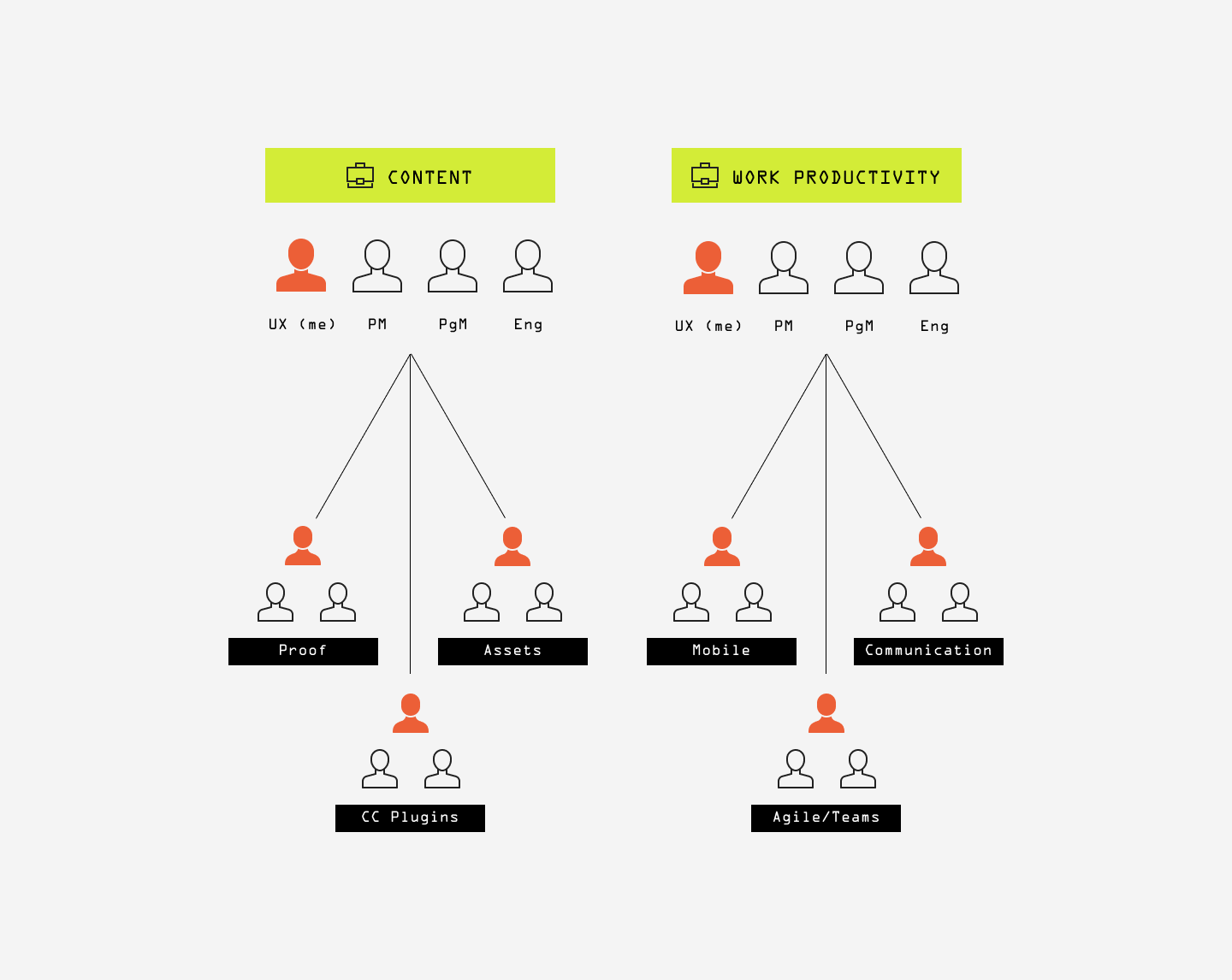
At this writing, I am over two portfolios of seven in our organization. This creates a micro-team within the broader UX organization. As a manager of this team, I feel it’s my responsibility to create a sub-culture that reflects the vision and individuals that make up this team.
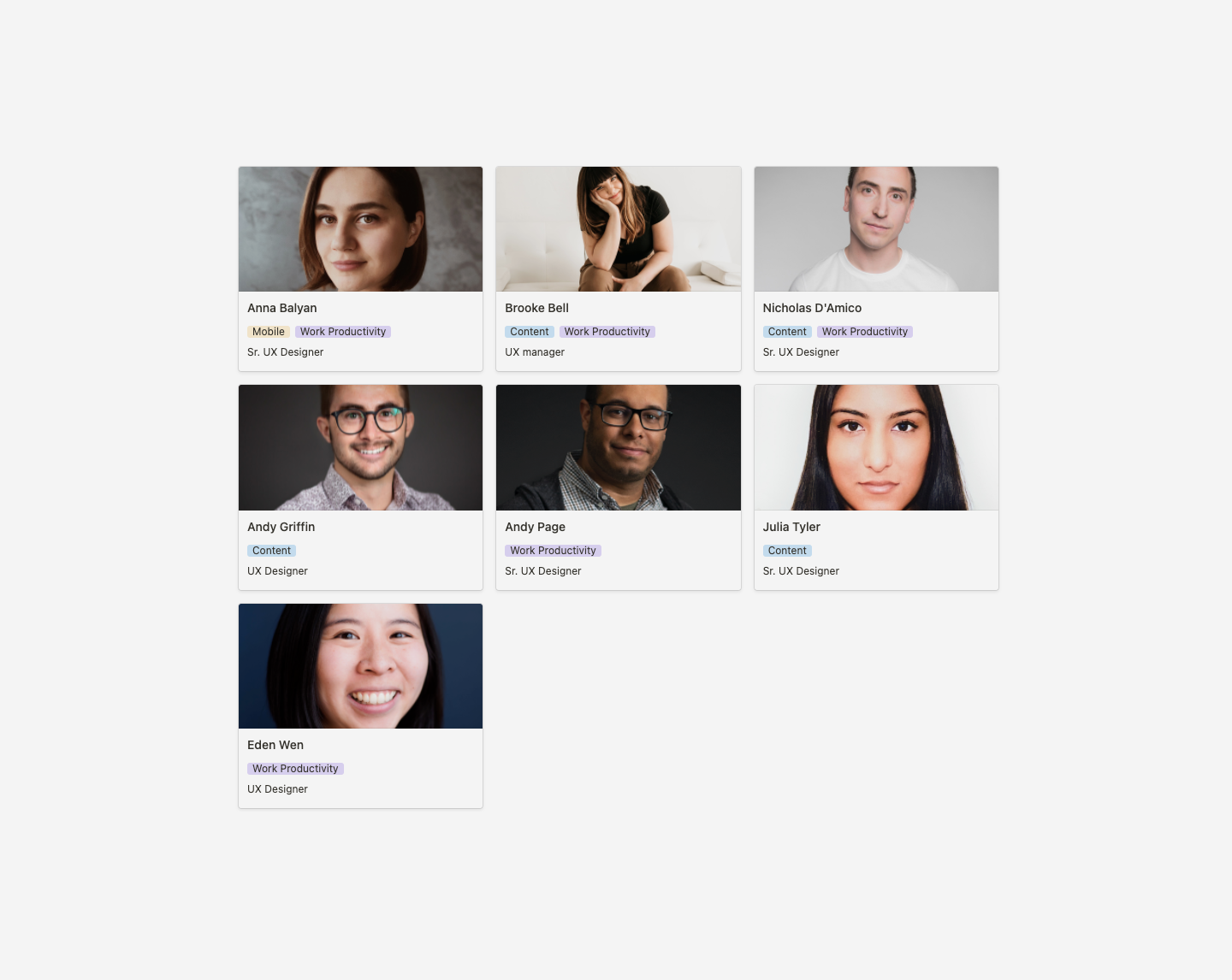
The team
Team principles
Empathetic
Growth Mindset
Diverse
Curious
Good Partners
These values carry through from our work within our team, into our embedded teams and on to our customers. We question each other thoughtfully, push each other to do more and do better with each iteration or new idea. Our diverse backgrounds and experiences help us see things from different vantage points, which ultimately create a more successful and inclusive product for our users. At the end of the day, we are a group of individuals that values helping people do their best work.